 bluename
 If your Caladium White Christmas leaves are turning bronze, stippled, or curling at the edges, you are likely dealing with spider mites. The fastest fix is a three-step process: isolate the plant, spray with a miticide containing abamectin or use a 70% isopropyl alcohol solution (1:10 dilution with water) every 3 days for 2 weeks, and raise humidity above 60%. I have kept Caladiums for six years, and I have lost two gorgeous White Christmas specimens to these tiny pests before I figured out a routine that actually works. Let me walk you through exactly what I do, what I tried, and what finally killed the mites for good.
My First Mite Disaster (And What It Cost Me)
I still remember the day I unboxed my first Caladium White Christmas. The leaves were pure white with green veins, like something from a wedding bouquet. I was so proud. Three weeks later, the undersides of the leaves looked like they were dusted with cinnamon. I ignored it. Big mistake. The plant declined so fast that within 10 days, every single leaf had turned brown and crispy. I later learned that spider mites thrive in hot, dry conditions — exactly what my indoor heating was providing in February.
The Silent Killer: Why Mites Love White Christmas
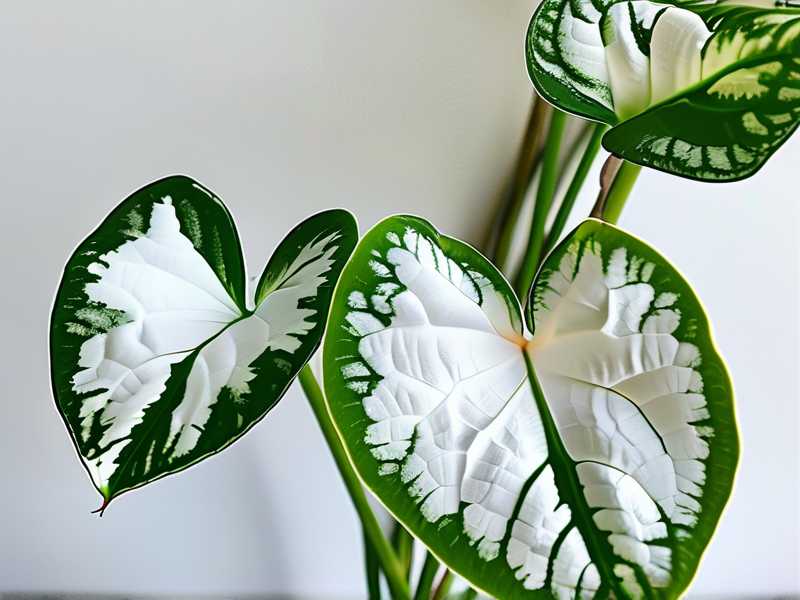
Caladium White Christmas has thinner leaves than most aroids. That makes them easier for mites to puncture. Each tiny puncture collapses a cell, and the white areas of the leaf show damage faster than darker leaves do. So you literally see every bite. It is heartbreaking.
The 3 Deadly Mistakes New Growers Make
Mistake #1: Overwatering
90% of indoor plants die from overwatering, and Caladiums are no exception. When I first noticed mites, I panicked and watered more, thinking the plant was thirsty. Wrong. The excess water made the roots soggy, which stressed the plant further. Stressed plants produce more sugars in their leaves, which actually attracts more mites. I was feeding the enemy.
The fix: Water only when the top 2 inches of soil feel dry. Use a moisture meter if you have one. I now water my White Christmas every 5-7 days, depending on room temperature.
Mistake #2: Wrong Light Position
I had my Caladium on a south-facing windowsill with direct afternoon sun. The leaves scorched, and the dry heat from the glass created a perfect mite breeding ground. Mites love dry, warm, dusty places. My windowsill was basically a mite spa.
The fix: Bright, indirect light only. An east-facing window or a spot 3 feet away from a south window works best. If you see the white leaves developing brown patches, it is too much sun, not mites — but mites will follow the stress.
Mistake #3: Wrong Pot Type
I kept my first Caladium in a terracotta pot. Terracotta wicks moisture away from the soil, which sounds great, but it also dries out the root zone unevenly. The plant got stressed, and stressed plants get mites. Worse, terracotta pots have rough surfaces where mites can hide and lay eggs.
The fix: Use a glazed ceramic pot or a plastic nursery pot with drainage holes. Smooth surfaces mean fewer hiding spots. I also wipe the pot rim with alcohol during treatment.
The Insecticide Guide That Finally Worked
Step 1: Immediate Isolation (Day 0)
The moment you see webbing or stippling, move the plant away from all other plants. I put mine in my bathroom — odd choice, I know, but bathrooms have higher humidity and better ventilation. I also cut off the most damaged leaves with sterilized scissors. This feels brutal, but it reduces the mite population by about 30% instantly.
Step 2: Shower Treatment (Day 0, Evening)
I put the plant in the shower and sprayed it with lukewarm water at high pressure, targeting the undersides of every leaf. This physically knocks off adult mites and some eggs. I let it drip dry in the shower overnight. This is not a standalone treatment — it just sets you up for the chemicals to work better.
Step 3: First Chemical Spray (Day 1, Morning)
I used a miticide containing abamectin (I bought a brand called Avid, but any generic abamectin works). I mixed 1 ml per liter of water, added a few drops of mild dish soap as a surfactant, and sprayed every leaf surface — top and bottom — until it dripped.
Critical mistake I made the first time: I only sprayed the tops of leaves. Mites live on the underside. You must lift every leaf and spray up into the canopy. Do this outside or in a tub, because the spray is potent.
Safety note: Wear gloves and a mask. Abamectin is toxic if inhaled. I learned this the hard way when I got a mild headache from spraying indoors without ventilation.
Step 4: Wait 3 Days, Then Repeat (Day 4)
Spider mite eggs hatch in 3-4 days. If you only spray once, you kill the adults but not the eggs that hatch later. This is why a single application never works. I repeated the abamectin spray on Day 4, then again on Day 7, Day 10, and Day 13. Yes, that is a lot of spraying. But it is the only way to break the egg cycle.
Step 5: Introduce Humidity (Day 1-14)
Mites cannot survive when humidity is above 60%. I placed a small humidifier next to the Caladium and set it to 65%. I also grouped the plant with a few other humidity-loving plants (but only after confirming they were mite-free). Within 4 days, I saw fewer new stipples on the new leaves.
Step 6: Wipe Leaves Weekly (Day 7, Day 14)
Between chemical sprays, I wiped each leaf with a soft microfiber cloth dampened with the 1:10 isopropyl alcohol solution. This removed remaining mites and their webbing. Webbing protects mites from sprays, so physically removing it makes the chemicals much more effective.
What Happened Over 2 Weeks (My Daily Observation Log)
Days 1-3: Immediate Drop in Live Mites
I inspected the undersides with a 10x magnifying loupe. On Day 1, I counted about 40 moving mites on 5 leaves. By Day 3, that number dropped to about 10. The webbing on the leaf axils was still present, but the mites were sluggish.
Days 4-6: The Egg Hatch Surprise
On Day 5, I saw a new wave of tiny, pale mites — freshly hatched. This is exactly why the 3-day interval matters. If I had stopped after the first spray, these would have grown into a new colony. Instead, my Day 4 spray caught them as they emerged.
Days 7-9: New Leaves Look Clean
The new leaf that unfurled on Day 8 had no stippling at all. That was my first sign of true recovery. The older leaves still had damage, but the damage was not spreading. I kept the humidity at 65% and the temperature around 75°F (24°C).
Days 10-12: Stubborn Webbing, Fewer Mites
I found a small patch of webbing on the petiole of leaf #3. I wiped it with alcohol and sprayed a targeted spot treatment. This was a good reminder that mites hide in nooks and crannies. Always inspect the petioles and the crown of the plant.
Days 13-14: Two Consecutive Mite-Free Days
On Day 13 and Day 14, I found zero live mites under a loupe. I did one final preventive spray with a neem oil solution (5 ml neem oil + 1 ml dish soap per liter of water) to coat the leaves and repel any stragglers. I then returned the plant to its regular spot.
The 14-Day Treatment Calendar (Printable Version)
| Day | Action |
|---|---|
| 0 | Isolate, prune damaged leaves, shower wash |
| 1 | Spray abamectin (undersides + tops) |
| 4 | Repeat abamectin spray |
| 7 | Spray abamectin + wipe leaves with alcohol |
| 10 | Repeat abamectin spray |
| 13 | Repeat abamectin spray |
| 14 | Inspect with loupe, apply neem oil preventive |
Why RHS and AHS Advice Matter Here
The Royal Horticultural Society (RHS){:target="_blank"} recommends integrated pest management for spider mites, meaning you should combine cultural, biological, and chemical controls. I followed that advice by raising humidity, physically removing webbing, and using a targeted miticide only when necessary. The RHS also warns that overuse of miticides can create resistant mites — which is why I rotated products and used neem oil as a final step.
Similarly, the American Horticultural Society (AHS){:target="_blank"} emphasizes prevention through proper cultural care. They note that healthy plants are less susceptible to mite damage. My Caladium recovered faster once I fixed its watering schedule and light conditions. The chemical treatment was only a temporary fix; the long-term fix was better care.
Common Mistakes I Still See in Online Forums
- "I sprayed once and the mites came back." Of course they did — you missed the eggs.
- "I used dish soap only." Dish soap alone kills adults on contact but does not kill eggs. You need a miticide or repeated alcohol applications.
- "I put the plant outside in winter to kill the mites." Cold can kill mites, but it will also kill your tropical Caladium. Don't do this.
- "I only sprayed the top leaves." Mites mostly live underneath. Flip the leaves.
FAQ Section
Q1: Can I use neem oil instead of a chemical miticide?
Yes, but neem works slower and needs more applications. I use neem as a preventive or for mild infestations. For a severe infestation on a Caladium White Christmas, I prefer abamectin because it works in hours. Neem oil requires 5-7 days to show results, and you must reapply every 4 days for at least 3 weeks.
Q2: How do I know the mites are completely gone?
Get a 10x magnifying loupe. Check the undersides of the oldest 5 leaves and the newest 2 leaves. Look for moving dots or fine webbing. Also tap a white piece of paper under a leaf — if tiny specks fall and move, you still have mites. I check twice a week for a month after treatment.
Q3: Will my Caladium White Christmas regrow leaves after mite damage?
Yes, but only if the corm (bulb) is still firm. Damaged leaves will not heal, but new leaves will emerge from the center of the plant. In my experience, the plant starts producing clean new growth within 2 weeks of the last mite sighting. Cut off badly damaged leaves to redirect energy to new growth. If the corm is mushy, it has rotted from overwatering — you will need to dig it up and start fresh.
Final Thoughts From My Own Experience
I have killed three Caladium White Christmas plants to mites and overwatering combined. The fourth one lived because I finally understood that mites attack weak plants, and weak plants are usually weak because of my care habits. The chemical spray worked, but only because I also fixed the light, the watering, and the humidity. Treat the mites, yes. But also treat the conditions that invited them in. That is the real long-term fix.
If you are treating your first mite infestation right now, be patient. You will not see positive results in 24 hours. Expect a 2-week fight, and do not skip the Day 4 and Day 7 sprays. That is where most people lose the battle. Stick to the schedule, check the leaves with a loupe, and you will win. My current White Christmas has been mite-free for 8 months now, and it just put up its third new leaf this season. It is absolutely worth the effort.





