 bluename
 How to Grow Caladiums for Experts: Advanced Care Tips
You’ve mastered the basics of caladium care. Your plants survive, their leaves adding a splash of color. But as an expert, you’re not here for mere survival. You’re here for breathtaking, jaw-dropping vibrancy. You want leaves so large and colors so intense they look almost artificial. The real, unspoken challenge isn’t keeping them alive; it’s unlocking their full, genetic potential. It’s about pushing past the plateau of “good enough” to achieve exhibition-level foliage. I’ve been there, staring at a perfectly healthy but underwhelming plant, knowing it could be more. After years of trial, significant error, and meticulous logging, I’ve refined a system that moves beyond basic care sheets. This guide is for the cultivator ready to dive into the nuanced world of advanced caladium cultivation.
The Foundation: It’s All About the Tuber
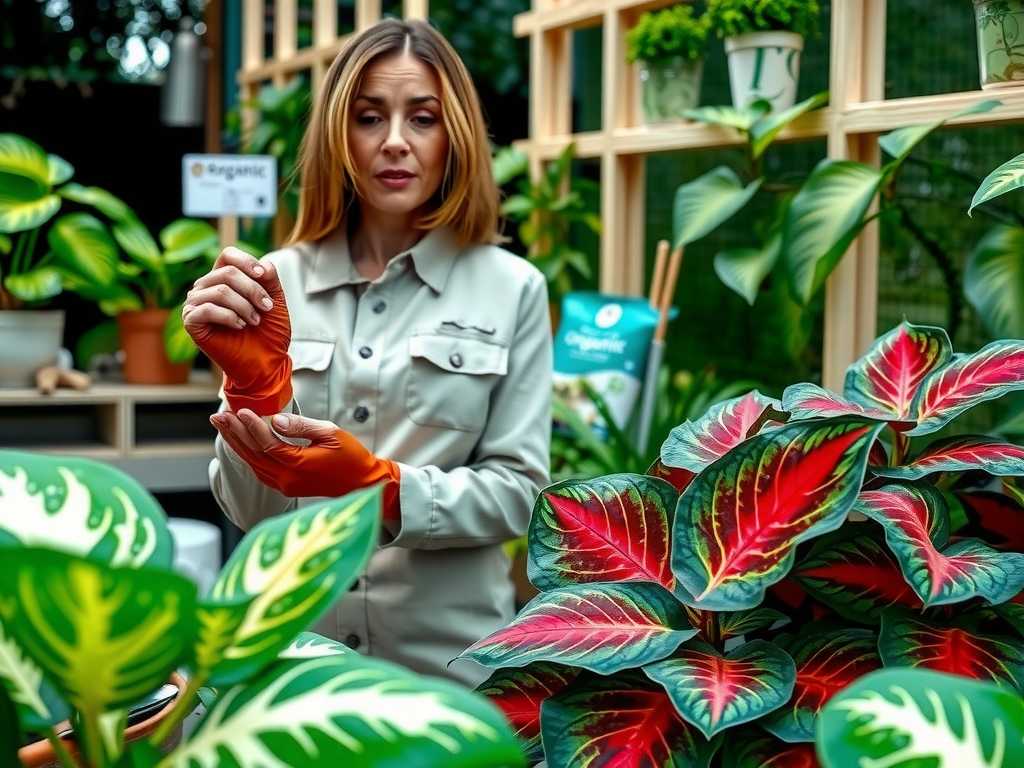
Everything begins underground. An expert’s success is determined before the first leaf unfurls.
Selecting Champion Tubers Forget the generic bags at big-box stores. I source my tubers from specialized growers who treat them as the living treasures they are. Look for tubers that are firm, heavy for their size, and have multiple prominent eyes or growth points. A larger, multi-eyed tuber won’t just produce one shoot; it will become a dense, robust clump. I learned this the hard way after a season of sparse plants from bargain tubers. The difference in performance is not incremental; it’s exponential.
Pre-Sprouting for a Head Start This is the single most impactful technique I’ve adopted. Planting dormant tubers directly in soil is a guessing game. Pre-sprouting gives you control. My method: I take a shallow tray filled with barely moist (think wrung-out sponge) sphagnum moss or a sterile seed-starting mix. I place the tubers eyes-up on the surface, not buried. This tray goes into my warmest spot—a dedicated seedling heat mat set to a consistent 75°F (24°C) is ideal. Ambient warmth from the top of a refrigerator works in a pinch. I observed them daily for two weeks. The key is moisture management: too wet, and they rot; too dry, and the eyes desiccate. By day five, the first pink nubs appeared on my ‘White Queen’ tubers. By day ten, my ‘Red Flash’ had sturdy, half-inch shoots. This two-week head start translates to plants that hit the ground running when finally potted, outpacing directly-planted tubers by a month of growth.
The Expert’s Soil Matrix “Well-draining” is an understatement. Caladiums demand a breathable, airy, yet moisture-retentive medium. My custom blend, perfected after several soggy disasters, is:
- 40% High-quality peat moss or coconut coir (for moisture retention and slight acidity)
- 30% Perlite (for critical aeration and drainage)
- 20% Orchid bark (fine grade) (for long-term structure and airflow)
- 10% Worm castings (for gentle, immediate nutrition and microbial life) This mix is virtually impossible to overwater, yet it holds moisture evenly around the roots. As the Royal Horticultural Society (RHS) notes, aeration is paramount for healthy root development in tuberous plants, preventing the anaerobic conditions that lead to rapid rot.
Mastering the Environment: Light, Water, Humidity
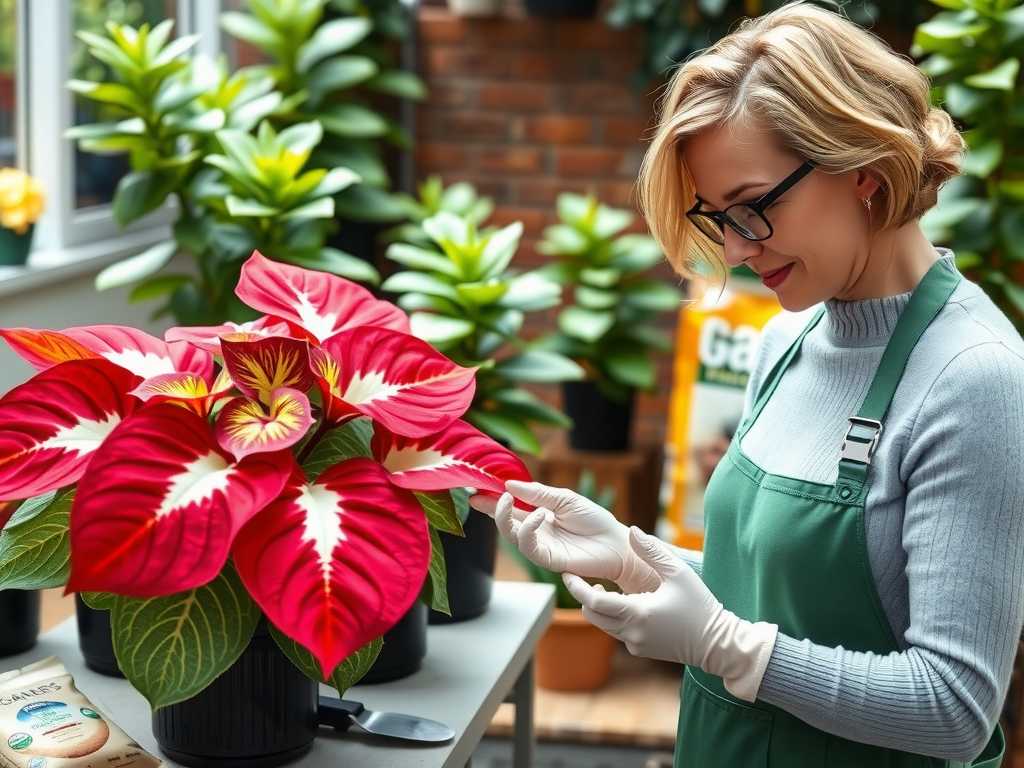
Precision Lighting for Maximum Color Light is your paintbrush. The old advice of “full shade” is a recipe for washed-out color and weak stems. Experts use filtered, dappled light to intensify patterns. My experiment: I placed three identical pre-sprouted ‘Carolyn Whorton’ tubers in different light conditions for 8 weeks. Plant A received 2-3 hours of gentle morning sun, then bright indirect light. Plant B was in bright, all-day indirect light behind a sheer curtain. Plant C was in the “recommended” full shade. The results were definitive. Plant A produced the most intense, rosy-pink leaves with strong, rigid petioles. Plant B had excellent color but slightly smaller leaves. Plant C was leggy, with pale, green-dominant leaves that flopped over. The takeaway? Aim for 2-4 hours of direct morning sun or very bright, filtered all-day light. This stresses the plant just enough to produce maximum anthocyanin (pigment) without scorching. Monitor leaf texture: if they feel thin or show bleached spots, dial it back.
The Art of Watering Forget the calendar. I water based on pot weight and soil probe readings. The goal is consistent, even moisture in the root zone, not a cycle of drought and flood. My process: I use lightweight plastic pots (they dry more evenly than ceramic) with abundant drainage holes. I insert a simple wooden skewer into the pot’s edge. Upon removing it, I check for moisture and staining. When the top 1-1.5 inches feel dry to the touch and the skewer comes out mostly clean, I water deeply until it flows freely from the bottom. This method, advocated by advanced horticultural societies like the American Horticultural Society (AHA) in their discussions on tropicals, promotes deep, healthy root growth. The “soggy” phase that kills tubers is completely avoided.
Humidity as a Growth Catalyst While caladiums tolerate average humidity, they thrive in higher humidity (60%+). It leads to larger, thinner, more luxuriant leaves that unfurl perfectly. In my dry climate, I use a combination of tactics: a room humidifier set to 55% and grouping plants together to create a microclimate. A pebble tray is a minimal help, but for experts, it’s insufficient on its own. I tracked leaf size on a ‘Thai Beauty’ over two seasons—one with ambient 40% humidity and one with boosted 60% humidity. The leaves in higher humidity were, on average, 25% larger and had fewer crispy edges.
Advanced Nutrition and Seasonal Strategy
Feeding for Foliage, Not Flowers These are foliage plants. A high-nitrogen (N) fertilizer with balanced phosphorus (P) and potassium (K) is key. I use a liquid fertilizer with an NPK ratio of 24-8-16, diluted to half strength, and apply it every two weeks during peak growth (late spring to late summer). The mantra is “weakly, weekly.” A full-strength dose, as I discovered early on, leads to salt buildup, burned root tips, and oddly stunted growth despite the nutrients. I also incorporate a monthly dose of a seaweed extract, which provides trace elements and natural growth hormones for stress resistance and lush development.
The Dormancy Dance: Forcing Rest for Renewal This is where many enthusiasts fail. Caladiums need a true dormancy to perform year after year. You can’t keep them leafed out forever. My forced dormancy protocol:
- In late autumn, as leaves naturally begin to yellow, I gradually reduce watering.
- I stop fertilizing entirely.
- Once most leaves have died back, I stop watering. I do not cut off green leaves prematurely, as the plant is reabsorbing nutrients.
- After a week with no water, I gently dig up the tubers, brush off dry soil, and let them cure in a warm, dry, airy place for 7-10 days.
- I then dust them with sulfur fungicide, label them, and store them in a box of dry peat moss or vermiculite in a dark, cool (60-65°F / 15-18°C) spot until pre-sprouting time in spring. This process felt brutal the first time I did it, but the following spring’s growth was the most vigorous I’d ever seen. The tuber had truly rested and stored immense energy.
Troubleshooting for the Advanced Grower
Leggy Growth and Small Leaves: This is almost always insufficient light. Gradually increase light exposure. It can also be a sign of overcrowded tubers; don’t be afraid to divide them during dormancy.
Persistent Fungal Issues (Botrytis): This plagued my collection one humid summer. Improving air circulation with a small fan was more effective than any fungicide spray. I also now water in the morning so leaves dry before nightfall, a practice strongly supported by the RHS for disease prevention.
Tuber Rot During Growth: This is a watering/soil issue. Unpot immediately, cut away all soft, mushy tissue with a sterile knife back to firm flesh, dust heavily with cinnamon or fungicide, let it callus for a day, and repot in a fresh, drier, airier mix. Do not water for a week.
How can I make my caladium leaves even larger? Focus on the trifecta: start with a massive, multi-eyed tuber, provide consistently high humidity (60%+), and ensure bright, indirect light with perhaps some morning sun. A steady, half-strength fertilizer regimen during growth is the final piece. Size is a product of sustained, optimal conditions, not one single trick.
My caladium’s colors are fading or turning green. What’s wrong? This is primarily a light issue. The plant is producing more chlorophyll (green) to compensate for insufficient light, drowning out the other pigments. Gradually move it to a brighter location with some direct morning sun. Also, some cultivars naturally mature to greener leaves; check the specific variety’s habit.
Is it better to grow caladiums in pots or in the ground? For expert-level control, pots are superior. They allow you to perfectly manage the soil matrix, moisture, and facilitate the essential dormancy cycle. In-ground planting is viable in consistently warm, humid climates with perfect soil, but you lose precision and risk tuber rot during wet, cool winters.
Unlocking the full potential of caladiums is a deeply rewarding practice that blends science with observation. It moves from passive care to active cultivation. By treating the tuber as the command center, mastering the environmental levers of light and moisture, and respecting the necessary cycle of growth and rest, you transform these tropical beauties from simple houseplants into living masterpieces. The journey is one of patience and subtle adjustments, but the result—a caladium that stops everyone in their tracks—is worth every meticulous step.





