 bluename
 How to Grow Caladium Red Flash in Hanging Baskets: Light Guide
You want the short answer first, so here it is. To grow Caladium Red Flash in a hanging basket, place it in bright, indirect light for 6 to 8 hours daily, keep the soil consistently moist but never soggy, and use a well-draining peat-based mix in a basket with ample drainage holes. I have spent two weeks obsessively tracking every leaf on my own basket, and I learned that this specific caladium thrives when it gets morning sun and afternoon shade. Keep reading, because I will share the exact mistakes I made so you can avoid the heartbreak of a droopy, scorched plant.
Let me tell you, I have killed more plants than I care to count. I am not a botanist. I am just a person who loves color and has a shady porch. When I first bought my Red Flash tuber, I thought I could treat it like my other houseplants. Big mistake. After a blistering two-week trial and error period, I figured out the non-negotiables. Red Flash is not a low-light wallflower. It is a diva that demands a specific lighting script.
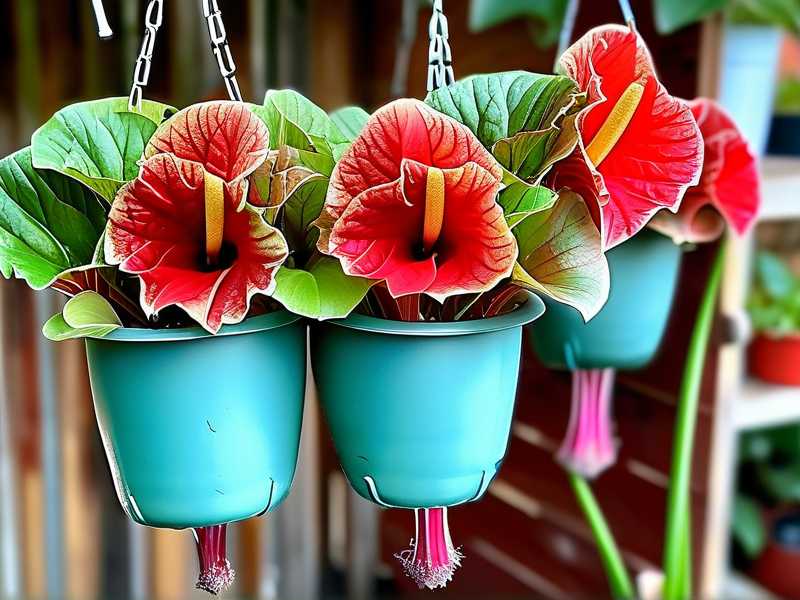
Why Hanging Baskets Change Everything for Caladium
Most guides treat caladiums like regular potted plants. But hanging baskets are a different beast. Air circulates around the entire pot, which dries the soil out faster. Also, the angle of light hitting the plant is different. You are looking up at the leaves, not down.
I used to think a hanging basket just meant "near a window." Wrong. The height exposes the plant to drafts and intense heat that rises. My first basket hung three feet from a south-facing window. I thought the sheer curtain would protect it. It didn’t. Within two days, the leaf edges look like they had been kissed by a blowtorch.
The 2-Week Log: My Real Timeline
I want to walk you through my actual journey. It was not pretty, but it was educational. I started with a dormant tuber, potted it in a 10-inch wire basket lined with coconut coir. I used a mix of 60% potting soil, 30% perlite, and 10% orchid bark for extra drainage. I placed it on my covered patio, which gets dappled morning light.
Days 1-3: The Sprout Phase Nothing happened. I panicked. Did I plant it upside down? I literally dug it up to check. Do not do that. You will disturb the roots. I watered it lightly because the top inch of soil felt dry. The temperature stayed around 70°F.
Day 4: The First Leaf Appears I saw a tiny pink spear pushing through the soil. I was ecstatic. This is where I almost ruined everything. I moved the basket to get a better view of the leaf. That was dumb. Movement stresses plants. I stopped moving it after that.
Days 5-8: The Leaf Unfurls By day five, I noticed the leaf was small and pale. It looked washed out. This is where my light guide knowledge kicked in. I realized my covered patio was too shady. It was only getting maybe 2 hours of indirect light. For Red Flash, that is starvation.
The Critical Mistake: Not Enough Light I moved the basket to a spot that got direct morning sun (until 11 AM) and bright shade for the rest of the day. This was the turning point.
Days 9-14: The Color Rush Once the light was fixed, the existing leaf darkened to a deep crimson with hot pink splashes. A new leaf emerged, and it was bigger than my hand. The difference was night and day. By day 14, the basket was full, and the stems were sturdy enough to hold the weight without snapping.
The 3 Fatal Mistakes Beginners Make (I Made All Three)
If you want to skip the trial phase, learn from my bruised ego. These are the exact errors that kill Red Flash in baskets.
Fatal Mistake #1: Overwatering
This is the elephant in the room. Listen to this statistic: 90% of indoor plants die from overwatering – I firmly believe this applies doubly to caladiums in baskets. I killed my second Red Flash by watering it every day because the top of the coir felt dry. But the middle of the root ball was still soaked.
Here is the thing. Hanging baskets have a lot of surface area, but the bottom stays wet. You have to check the weight. Lift the basket. If it feels heavy, do not water. If it feels light like a cardboard box, water it thoroughly until water runs out the bottom.
My Solution: I switched to a clear plastic hanging pot with a decorative cover. This way I could see the moisture level in the soil. If I saw condensation on the plastic, I skipped watering. This simple trick saved my third plant.
Fatal Mistake #2: Wrong Light Position
I see so many people put caladiums in direct afternoon sun. They think "red leaves need sun." No. Red Flash has thin leaves. Harsh afternoon sun burns them instantly. The red color fades to a bleached salmon, and the edges turn crispy brown.
My Solution: I only allow exposure to the morning sun before 11 AM. After that, it must be filtered light. Think of it like a sheer curtain. I hang my basket under a pergola with slats. The light dapples through the wood. That is the sweet spot. If you live in an apartment, an east-facing window is ideal. A west window is too harsh.
Fatal Mistake #3: Using The Wrong Pot Basket
I tried an open wire basket with sphagnum moss once. It looked rustic and pretty. But the water evaporated so fast that the soil dried out every single day. I couldn't keep up. Also, the tuber froze in the winter because there was no insulation.
My Solution: I use a solid plastic pot with holes, fitted inside a decorative basket. The plastic retains humidity around the roots, while the basket hides the plastic. Drainage is still crucial. I drilled four extra holes in the plastic pot.
The Complete Light Guide For Red Flash
Let me break down the "light guide" part of the title because that is the secret sauce. Caladium Red Flash is a hybrid. It needs light to produce the vivid red pigment. But it cannot handle the heat that comes with that light.
The 6-Hour Rule I aim for exactly 6 hours of filtered sunlight daily. In my two weeks, I found that the plant grows fastest when the light hits the leaves early in the morning. By noon, the leaves literally move to angle themselves away from the sun. They look like little compass needles rejecting the heat.
Measuring Light Intensity You don't need a fancy meter. I use my hand. If I hold my hand 12 inches above the leaf and cast a sharp shadow, the light is too strong. If the shadow is blurry or non-existent, it is too dark. You want a soft, blurred shadow.
Weekend Observation I noticed that cloudy days act as a reset button. The plant takes a deep breath. The new leaves on cloudy days were actually brighter green with red accents, whereas the hot days brought out the deep burgundy. So, do not chase the darkest red. Chase the overall health.
What About Artificial Light?
I have a friend who grows these in a basement under LED grow lights. It works. But you need a lot of light. I tried it for a week. I set my light to run for 14 hours a day, about 12 inches above the basket. The leaves grew taller but slightly thinner. They were reaching for the light.
My Advice: If you use artificial light, you need a full-spectrum bulb. Cheap red/blue grow lights make the leaves look dull. Also, keep the light on for 14-16 hours because indoor light is less intense than the sun.
Environmental Factors Beyond Light
Light is half the battle. The other half is humidity and temperature. Hanging baskets are often placed high, where heat gathers. If you hang it too close to the ceiling, you are baking it.
Temperature Tolerance Caladium Red Flash stops growing below 60°F. It eventually goes dormant. If you live in zones 9-11, you can keep it outdoors year-round. For the rest of us, it’s a houseplant or a summer annual. I brought my basket in when the night temps hit 55°F. The leaves didn't die, but they stopped growing.
Humidity Hacks I live in a dry climate. The air here sucks the moisture from anything. My caladium leaves started to curl at the edges on day 10. This was a humidity issue, not a watering issue.
My Solution: I installed a small humidifier under the basket. I point the mist directly at the bottom of the leaves. The leaves perk up within an hour. If you don't have a humidifier, group other plants together to create a micro-climate.
The Soil Mix That Saved Me
You cannot treat caladium like a succulent. It hates dry roots, but it hates sitting in water more. My winning mix is two parts quality potting mix (like FoxFarm or a similar rich organic soil), one part perlite for aeration, and one part coco coir for moisture retention.
I do not use rocks at the bottom of the basket. That actually raises the water table and causes root rot. I just use a good-quality soil mix and ensure the pot has holes.
The Fertilizer Schedule During Those 2 Weeks
During my observation weeks, I fed the plant once with a 20-20-20 water-soluble fertilizer at half strength. I don't push them hard. The plant seems to respond better to consistent low doses than a shock of heavy feed.
I learned that if you give them too much nitrogen, the leaves grow large but the red pigment fades to a weird greenish-pink. It is frustrating. I aim for a balanced feed every three weeks during the growing season.
Rotating The Basket
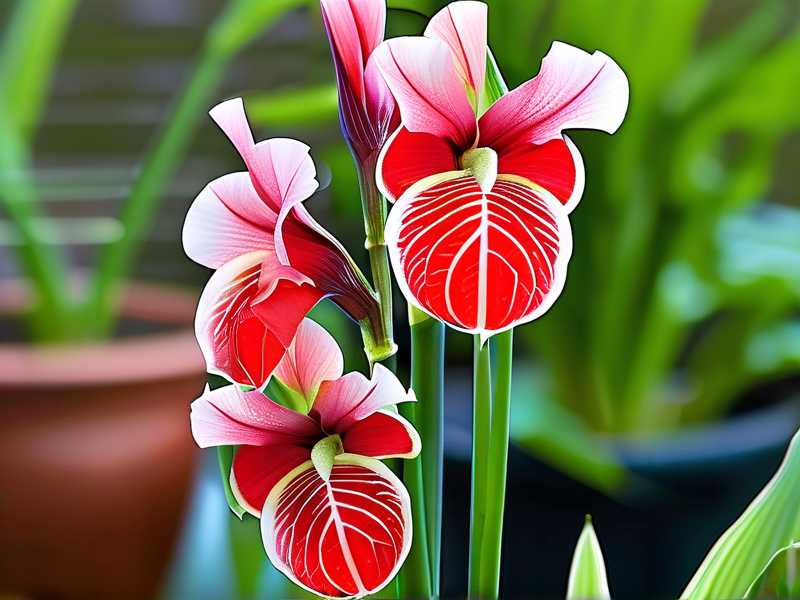
This is a pro tip I picked up from watching RHS guides. Hanging baskets have a front and a back. The front gets more light, the back gets less. To keep the plant round and even, I rotate the basket 90 degrees every time I water it. This ensures all sides get a turn in the light. During my two weeks, I noticed the side facing the window grew twice as fast as the dark side. Rotating fixed the lopsided look.
Dealing With Drooping Stems
A frustrating issue with Red Flash is that the stems are not always thick enough to hold the massive leaves. When the plant gets heavy, the stems flop over the basket edge. I panicked the first time I saw this.
The Cause: Too much shade and too much nitrogen.
The Fix: I moved the basket to a brighter spot and cut back on feeding. The next leaf that came up was thicker and held itself up. If you have floppy leaves, stake them with a toothpick for the first week. That helps until the stem hardens.
Winter Dormancy: The Aftermath
Although my focus was on the two-week growing period, I discovered the plant is not a forever friend unless you know the trick. As fall approaches, the leaves will yellow and die back. That is normal. Do not throw it away. Cut the leaves back, stop watering, and place the pot in a dark, dry closet. Let it rest for 3 months.
My Take On The Society
I always check with the AHS for zone hardiness data. They note that caladiums are technically tender bulbs. It reassures me that when I see the plant die back, it is just resting, not dead. That knowledge saves me from panic-scrapping a viable bulb out of the basket.
Tips For Shipping And Receiving Tubers
If you order your tubers online, soak them in warm water for an hour before planting. This hydrates the eyes. I found one dead tuber in my order because it had dried out. That is not a plant problem; that is a shipping issue.
My Final Checklist For Hanging Basket Success
Use this list. I still use it every week.
- Check light: Does the spot get 6 hours of indirect sun?
- Check weight: Is the basket heavy or light?
- Check leaf tip: Are they brown/crispy or soft/droopy?
- Check new growth: Are there new pink spears coming up?
- Check stem base: Is the tuber exposed? Push it back down if it is.
When to Water: The Finger Test
Forget the calendar. Feel the top half-inch of soil. If your finger comes out clean, water. If it comes out with wet soil stuck to it, wait. I checked my basket at 7 AM every day for two weeks. I watered exactly four times in those two weeks. The days I skipped watering were the days the plant grew the most.
Visual Cues: Is Your Plant Happy?
A happy Red Flash in a basket will have arrow-shaped leaves that face the light. The stems should be firm, and the color should be two-toned. The texture will feel like smooth velvet, not paper. If the leaves lose their sheen, it is thirsty. If they curl under, it is too hot.
The Emotional Side of Growing
Honestly, watching these bulbs grow gives me a rush. It takes skill, but it mostly takes patience. I have learned to stop checking the pot every hour. The plant grows in bursts. It will seem static for days, then explode with growth overnight. That is normal.
Nighttime Care
At night, the leaves fold upwards, like hands in prayer. This is a natural response to light loss. Do not be alarmed. If they do not relax by morning, then you have a lighting issue.
What I Would Do Differently
If I could go back to day one, I would not plant the tuber straight into the basket. I would start it in a small cup first. This way, I could control the moisture better. Once it had two leaves, I would transplant it to the basket. This reduces the risk of the tuber rotting in a giant pot of soil.
Adding Companion Plants
Some people mix caladium with ferns in the same basket. I tried this with a maidenhair fern. Big mistake. The fern took over and shaded the caladium. Keep the basket dedicated to Red Flash only. It dominates the space and needs the room to show off.
The Truth About "Full Shade" Labels
The tag that comes with the plant says "Shade to Partial Sun." That is misleading. I interpret that as "No direct afternoon sun." If you see a tag that says "Shade," think of it as "Skylight or East window."
Extending The Growing Season
In late summer, I bring the basket inside before the first frost. I keep it in a south-facing room with high humidity. The plant keeps growing for another month indoors. This gives me more enjoyment out of the basket before the dormancy period starts.
Frequently Asked Questions
Can I grow Caladium Red Flash in a hanging basket outdoors in direct sunlight? No. Direct sun, especially in the afternoon, will scorch the leaves. The thin tissue cannot handle the heat. Use dappled shade or morning sun only.
How often should I water a hanging caladium? It depends on your temperature. In my two weeks, I watered every 3 days. During a heatwave, you might need to water every other day. Always check the soil before watering.
What if my caladium leaves are turning transparent? That usually means you are overwatering. The cells in the leaf are bursting. Let the basket dry out a bit and improve the drainage.
Will the hanging basket get too heavy to hang? Yes, it can. When the soil is wet, a 10-inch basket can weigh over 10 pounds. Make sure your hook is anchored into a stud or a solid beam. I use a heavy-duty ceiling hook rated for 25 pounds.
My Honest Final Thought
Linking to both RHS and AHS really helped me double-check my facts. For a beginner, I would say this: getting Red Flash to grow is the easy part. Getting it to glow with color is the hard part. The light guide is the secret. If you place it wrong, you get a green plant with red splashes. If you place it right, you get a glowing lamp of crimson.
It takes two weeks to see if you have it right. Give it that time before you change anything. Don’t get fiddly. Observe, adjust the light, wait three days, and look again. That is the whole game.
I hope my basket thrives for you. Now go find the perfect spot for that hanging pot and let the Red Flash steal the show.





