 bluename
 How to Use Grow Lights for Caladiums in Winter: Daily Schedule
Winter is here, and my beloved caladiums, those vibrant heart-throbs of my summer garden, are looking… sad. Their colorful leaves are fading, growth has stalled completely, and I can almost hear them sighing for the long-lost sun. If you’re like me, staring at your dormant or struggling caladiums and wondering how to keep them thriving indoors, you’ve hit the core gardener’s winter dilemma. The solution isn’t magic—it’s a strategic daily schedule with grow lights. I learned this not from theory, but from a hands-on, two-week experiment that transformed my wilting plants. Let me walk you through my exact process, the mistakes I made, and the precise daily lighting routine that brought my caladiums back to life.
Understanding Caladiums' Winter Light Needs
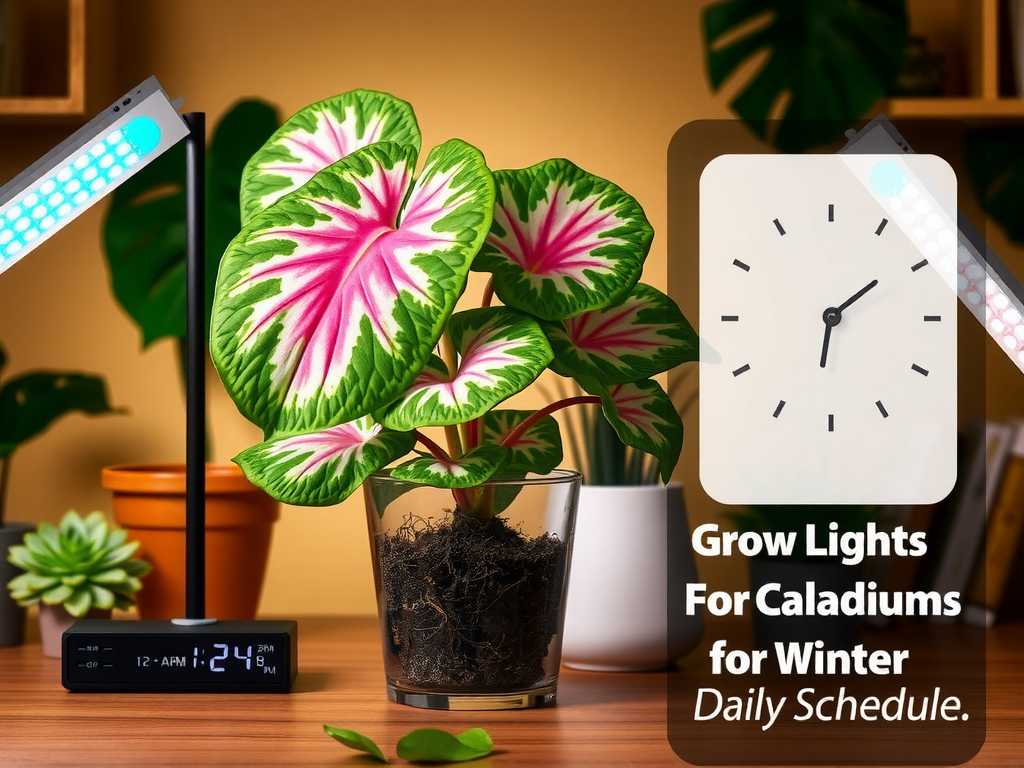
First, we must understand what we’re working with. Caladiums are tropical plants that flourish under the dappled sunlight of forest canopies. They don’t want the harsh, direct midday sun, but they crave bright, indirect light for many hours a day. In winter, natural light through a window is often too weak and short-lived. This leads to etiolation—weak, leggy stems—and loss of that spectacular leaf coloration.
According to research cited by the American Horticultural Society (AHS), light is the primary driver of photosynthesis and pigment production. For foliage plants like caladiums, insufficient light directly compromises their ability to maintain vibrant variegation and firm leaf structure. This isn’t just about survival; it’s about preserving their ornamental beauty. My goal was to replicate those ideal forest-floor conditions indoors, and a simple desk lamp wasn’t going to cut it.
My Gear: Choosing the Right Grow Light Setup
After some research, I settled on a full-spectrum LED panel. LEDs are energy-efficient, emit less heat (crucial for delicate caladium leaves), and their full-spectrum output mimics natural sunlight, supporting all stages of plant growth. I chose a panel with adjustable brightness and a built-in timer—a feature that became the cornerstone of my daily grow light schedule for caladiums.
My setup was simple: a shelf in my living room where my pots were gathered. I mounted the light about 18 inches above the tallest leaf. This distance is key; too close risks light burn (yes, I learned this the hard way), and too far renders the light ineffective. I also used a basic light meter app on my phone to get a baseline. The corner where my caladiums sat registered a gloomy 50 foot-candles. My grow light, at that height, boosted it to a target range of 200-400 foot-candles of bright, indirect light—perfect for caladiums.
The Two-Week Experiment: My Daily Grow Light Schedule
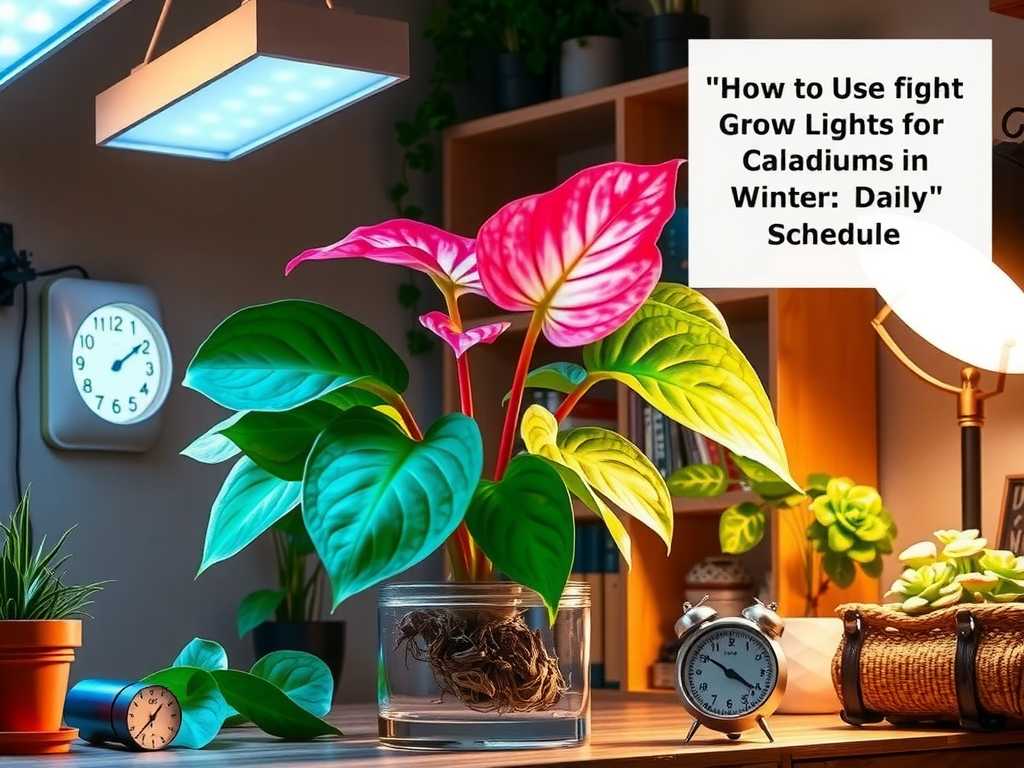
Here is the exact caladium winter care lighting routine I followed and observed over 14 days. Consistency, I discovered, is everything.
Week 1: The Adjustment Phase
- Daily Schedule: I started conservatively. The timer was set for 10 hours on, 14 hours off. The lights would turn on at 8:00 AM and off at 6:00 PM, simulating a reasonable winter day.
- Observations (Days 1-3): Frankly, not much. The plants seemed stable, no further drooping, but no improvement either. The soil stayed moist longer, indicating slowed evaporation.
- The Mistake & Fix (Day 4): I noticed the very tips of one white ‘Candidum’ leaf looking slightly pale and crispy. Panic! Was it too much light? Upon closer inspection and checking online resources like the Royal Horticultural Society (RHS) advice on houseplant lighting, I realized it was likely the residual heat from my first, cheaper fluorescent bulb I’d tested briefly before the LED. I immediately raised the LED panel another 4 inches to 22 inches above the plants. The crispiness did not spread, confirming it was a past injury.
- Observations (Days 5-7): A turning point! By day 7, I could swear the red veins on my ‘Red Flash’ caladium looked more defined. The leaves also seemed to be orienting themselves more squarely under the light source. Growth was still slow, but the energy in the plants had changed.
Week 2: Optimization and Visible Growth
- Daily Schedule: Encouraged, I extended the photoperiod. I adjusted the timer to a 12-hours on, 12-hours off cycle (8:00 AM to 8:00 PM). This longer exposure is part of a crucial indoor caladium light management strategy to boost photosynthesis without the stress of high intensity.
- Observations (Days 8-10): The most exciting development: new growth! Tiny, tightly furled spears began pushing through the soil in three of my five pots. The existing leaves felt thicker, more robust to the touch. The classic “reach” or legginess I’d seen before the experiment was absent.
- Observations (Days 11-14): The new leaves unfurled. While not full-sized yet, their color was astonishingly vivid—no fading, no weakness. The plants were clearly using the light energy efficiently. I also maintained my normal watering routine, but now the soil dried at a more expected rate, signaling active root and plant function.
Key Factors Beyond the Timer: My Integrated Care Routine
A grow light schedule doesn’t work in a vacuum. It integrates with everything else.
- Watering: With grow lights, soil dries faster than in a dark corner. I abandoned a calendar-based schedule and returned to the finger-test: watering only when the top inch of soil was dry. Overwatering is a bigger killer in winter than underwatering.
- Humidity: Caladiums love humidity, and indoor heating dries the air. I placed my pots on a large pebble tray filled with water. The evaporating water created a perfect microclimate around them without making the soil soggy.
- Rotation: Every other day, I would give each pot a quarter turn. This ensured all sides of the plant received even light, promoting symmetrical growth and preventing one-sided leaning.
Troubleshooting Common Grow Light Issues for Caladiums
Even with a schedule, things can go slightly off track. Here’s what to watch for:
- Leaf Scorch or Bleaching: If you see white or pale brown patches, the light is too intense or too close. Increase the distance between the light and the foliage immediately. My Day 4 fix is a prime example.
- Leggy, Stretched Petioles: If the stems are abnormally long and weak, reaching desperately for light, the intensity is too low or the duration too short. Either lower the light fixture slightly (if heat allows) or increase the daily duration by an hour or two.
- No New Growth or Color Fading: This often points to an insufficient daily dose. Consider both intensity and duration. Can you safely increase brightness? Can you extend the “on” period to 14 hours? Sometimes, the light spectrum is wrong; ensure you’re using a “full-spectrum” or “broad-spectrum” light.
How long should I leave grow lights on for my caladiums daily? Based on my two-week experiment and subsequent success, I found that 12-14 hours of light per day is the sweet spot. This provides enough energy for strong growth and color retention without causing stress. Start with 10-12 hours and increase gradually if needed.
Can I use any blue or red LED light for my caladiums? While blurple (blue-red) lights can support growth, full-spectrum white LEDs are superior for caladiums. They provide a balanced light that not only fuels growth but also accurately brings out the stunning reds, pinks, and greens in the foliage, and they are much more pleasant for your living space.
Will my caladiums go dormant if I use grow lights? If you provide sufficient light (12+ hours daily), consistent warmth, and proper water, you can effectively prevent dormancy and encourage your caladiums to grow actively through the winter. The key is mimicking their ideal growing season conditions. My plants skipped dormancy entirely thanks to the consistent schedule.
Seeing those first vibrant new leaves unfurl under the gentle glow of my grow lights was a pure victory. It wasn’t just about keeping plants alive; it was about defying the gray winter and maintaining a pocket of tropical brilliance in my home. The journey taught me that success lies in the details: the right spectrum, the careful distance, and, most importantly, the unwavering consistency of a daily schedule. By observing your plants closely, adjusting patiently, and integrating light with thoughtful watering and humidity care, you can turn your winter worry into a year-round celebration of color. Your caladiums don’t have to sleep through the cold months—they can shine right through them.





