 bluename
 How to Prevent Caladium Pest Reinfestation: Regular Checks Are Your Secret Weapon
There’s a special kind of heartbreak for a plant lover. It’s the moment you spot a tiny, sap-sucking aphid on the back of a leaf you just cleaned last week, or the faint, telltale webbing of spider mites on a caladium you thought was finally thriving. You’ve battled pests before, won the war, and now here they are again. The frustration is real. I’ve been there, staring at my prized ‘White Queen’ and ‘Red Flash’ caladiums, feeling like I was stuck in a never-ending cycle of spray, pray, and repeat. It took losing a beautiful specimen to a severe spider mite reinfestation to realize my crucial mistake: I was treating symptoms, not the system. I was reacting to outbreaks instead of preventing them. The true key to lasting peace in your caladium collection isn’t a stronger pesticide; it’s a simple, consistent habit of regular checks.
This guide is born from that hard-learned lesson. I’ll walk you through the exact, proactive inspection routine I developed—a system that transformed my pest management from chaotic to controlled. I’ll share my real, hands-on steps, the results I observed over a dedicated two-week monitoring period, the pitfalls I stumbled into, and how I fixed them. Let’s build a fortress of vigilance around your caladiums so you can enjoy their stunning foliage without the constant shadow of pests.
Why Reactive Pest Control Fails Caladiums
Caladiums, with their paper-thin, colorful leaves, are like a gourmet buffet for pests. Aphids adore their tender new growth, spider mites thrive in the dry conditions we sometimes create indoors, and fungus gnats lurk in moist potting mix. When we only act after seeing a full-blown infestation, we’re already behind. Pests reproduce exponentially. By the time you see damage—yellow stippling, curled leaves, sticky honeydew—their population is established and harder to eradicate. The goal is to catch the scout, the first few invaders, before they can call in the cavalry.
Experts from the American Horticultural Society (AHS) emphasize that “the most effective pest management strategy is prevention and early detection.” This aligns perfectly with the principle of Integrated Pest Management (IPM), which prioritizes regular monitoring as its cornerstone. It’s not just about being observant; it’s about having a structured, repeatable process.
Building Your Proactive Inspection Routine: A Step-by-Step Guide
I committed to a formal, twice-weekly inspection routine for all my caladiums. Here’s the exact framework I followed, which you can adapt immediately.
Step 1: Gear Up and Set the Stage
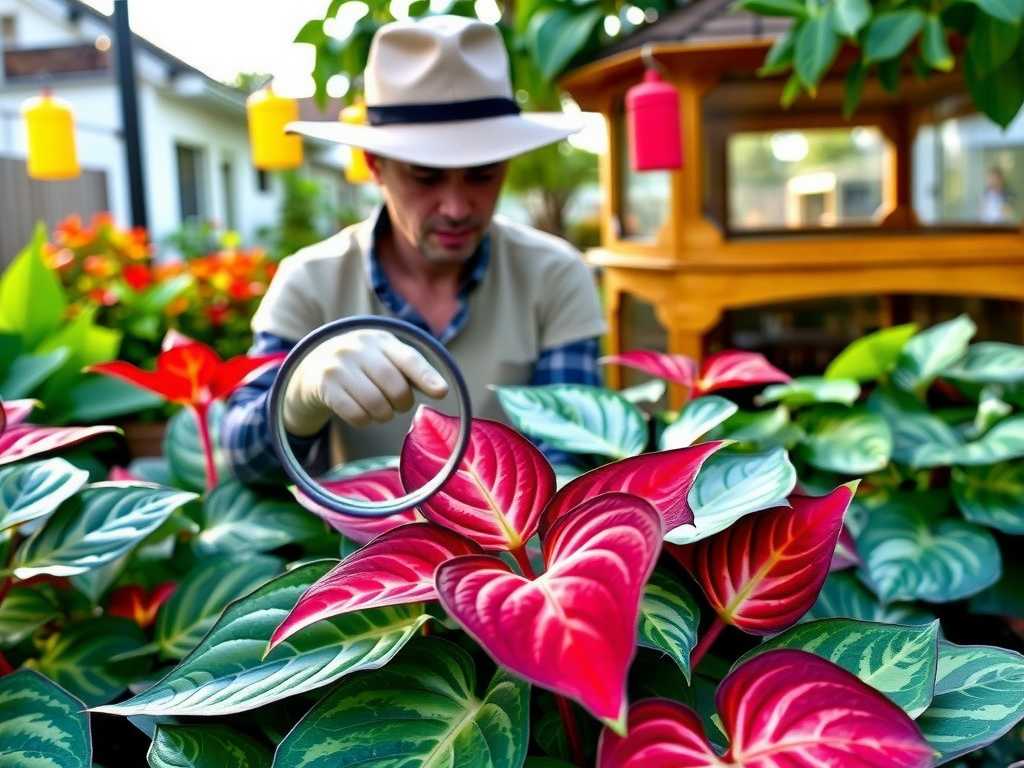
First, I gathered my tools: a bright, portable LED magnifying lamp (a 10x jeweler’s loupe works too), a roll of blue painter’s tape for marking plants, a notepad or a plant care app, a small bowl of soapy water, and cotton swabs. Consistency is key, so I chose Tuesday mornings and Saturday afternoons as my fixed check times.
I learned the hard way that inspecting for caladium pests requires good light. My first check in the evening with room lighting was a failure; I missed subtle signs. Natural, bright, indirect light is non-negotiable.
Step 2: The Systematic Leaf-by-Leaf Examination
This is the core of the routine. I start with one plant and work methodically.
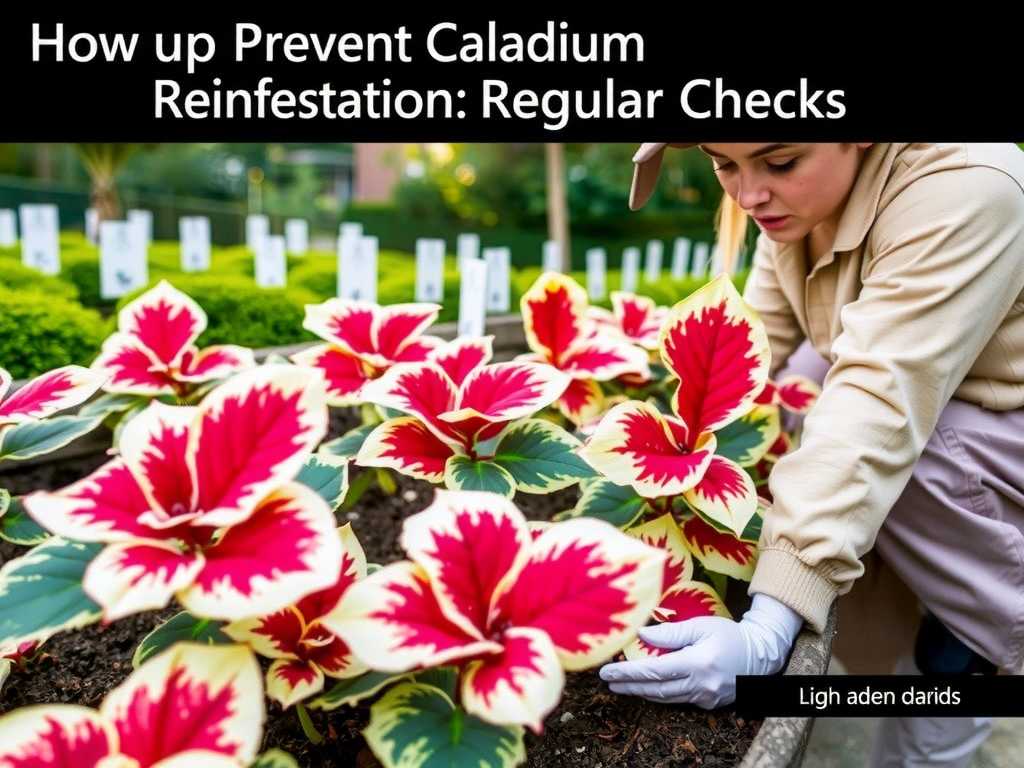
- The Underside Inspection: This is Ground Zero. Gently support a leaf from below and turn it over. I spend at least 30 seconds per leaf, looking for any movement, tiny dots (eggs or nymphs), or sticky residues. Spider mites and aphids are masters of hide-and-seek here.
- The Stem and Petiole Check: I run my fingers along the stems and leaf stalks (petioles). Mealybugs look like tiny tufts of white cotton and love to nestle in the joints where the leaf meets the stem.
- The Soil Surface Scan: Before watering, I look for fungus gnat adults skittering over the soil or any unusual debris. A quick, gentle stir of the top quarter-inch of soil can reveal larvae.
During my initial two-week deep dive into this routine, I made a critical error: I rushed. On day three, I quickly scanned my ‘Miss Muffet’ caladium and saw nothing. Two days later, a full colony of aphids had exploded on that same plant. I realized my scan was too superficial. The fix was to literally talk myself through the inspection: “Stem clear, leaf vein clear, underside near the tip clear…” This verbal checklist forced me to slow down and be thorough.
Step 3: Documentation and Action Thresholds
When I found a single aphid on my ‘Pink Beauty,’ I didn’t panic. I marked the pot with a small piece of blue tape on the rim and noted the date and pest in my app. The Royal Horticultural Society (RHS) advises that for many common pests, “early infestations can often be controlled by physical removal.” That became my rule.
For 1-5 pests: Immediate physical removal. I dipped a cotton swab in soapy water and wiped them off. The plant went into a “quarantine watch” zone away from others. For more than 5 pests or signs of spreading: Immediate localized treatment. I used a strong jet of water (for mites) or a spray of insecticidal soap, but only on the affected plant. This documentation was a game-changer. It turned anxiety into data. I could see which plants were more susceptible and track if my interventions were working.
The Transformative Results: What Two Weeks of Vigilance Revealed
The two-week observation period was enlightening. By the end of the first week, the habit was forming. By the end of the second week, I saw tangible results:
- Early Interception: I caught a spider mite issue on a new ‘Florida Sweetheart’ caladium on day four. There were maybe 10 individuals and minimal webbing. A simple shower and two follow-up wipes with a damp cloth eradicated them completely. A month prior, this would have gone unnoticed for weeks.
- Pattern Recognition: My ‘Candidum’ caladium, positioned slightly closer to a heat vent, consistently showed drier soil and was the first to have mite concerns. This informed my care—I moved it to a more humid spot and made it a “high-priority” check plant.
- Reduced Chemical Reliance: I didn’t reach for a single bottle of neem oil or systemic pesticide during this period. Physical removal and environmental adjustments were enough. My plants were less stressed, and I felt more in tune with their needs.
The process of preventing pest recurrence in caladiums shifted from being a chore to a mindful, almost meditative part of my plant care. It was no longer a battle; it was a strategic defense.
Integrating Checks into Your Overall Care for Lasting Prevention
Regular checks don’t exist in a vacuum. They are the monitoring system that informs all your other care decisions.
- The Quarantine Imperative: Every new plant now spends its first two weeks in isolation, undergoing my rigorous inspection routine. This is the single most effective practice I’ve adopted to stop caladium pests from coming back. It prevents newcomers from introducing problems to your established collection.
- Environmental Synergy: My checks told me when humidity was too low (mite alerts) or soil was staying too wet (gnat alerts). I used this data to adjust my humidifier settings and watering habits, creating an environment less hospitable to pests.
- Seasonal Shifts: I increase check frequency during seasonal transitions (like when heating comes on in fall) and decrease it slightly during stable, high-humidity summer months. The routine is consistent, but its intensity is flexible.
Common Questions from Fellow Caladium Guardians
How often should I really be checking? For most indoor settings, a thorough check once a week is sufficient for maintenance. However, if you’re introducing new plants, treating a previous issue, or in a dry season (winter), increase it to twice a week. The key is consistency over frequency. A perfect weekly routine is better than a sporadic daily one.
I keep finding a few gnats, but my plants seem fine. Should I be worried? A few adult fungus gnats are often more a nuisance than a direct threat to mature caladiums. However, their larvae can damage roots in large numbers. Your regular check has served its purpose—you’ve detected it early. Implement sticky yellow traps for adults and let the soil dry out more between waterings. This addresses the root of the problem (literally) before it escalates.
What’s the one tool I shouldn’t skip? A magnifier. The naked eye misses the earliest stages of many pests. A simple 10x loupe or a magnifying app on your phone will reveal a hidden world on your leaves and help you identify problems when they are easiest to manage.
Winning the war against caladium pests isn’t about having the most toxic arsenal; it’s about having the most consistent eyes. By instituting a simple, regular inspection routine, you move from a position of fear and reaction to one of confidence and control. You become an active guardian of your plants’ health, catching minor issues before they become major headaches. This practice, more than any spray, has given me the lush, vibrant, and pest-resistant caladium display I always wanted. Give this system a dedicated two-week trial. Watch your plants closely, document what you see, and adjust your care accordingly. You’ll likely find that the greatest tool for a beautiful, healthy caladium collection was with you all along: your own attentive gaze.





