 bluename
 How to Make Caladium Leaves Brighter: My 2-Week Light Adjustment Experiment
I’ve always been mesmerized by the stained-glass beauty of caladium leaves. But last season, my collection lost its magic. The vibrant pinks faded to whispers, the fiery reds dulled to rust, and the lush greens looked tired and washed out. It was heartbreaking. I was watering correctly, fertilizing diligently, yet the brilliance was gone. That’s when I realized I was overlooking the single most crucial factor: light adjustment. Getting the light right isn’t just about growth; it’s the secret switch that turns on a caladium’s full, dazzling color potential. In this guide, I’ll walk you through my personal, hands-on journey of manipulating light to make caladium leaves brighter, sharing every step, mistake, and the stunning transformation I witnessed over two focused weeks.
Understanding the Light-Color Connection in Caladiums
Before moving a single plant, I needed to understand the why. Caladiums are understory plants in their native habitats, thriving under the dappled light of taller trees. This means they crave bright, indirect light to fuel photosynthesis and produce their spectacular pigments, but direct sun scorches their delicate leaves, causing bleached spots and brown crisping.

Dr. Linda Chalker-Scott, a horticulture expert whose work is often cited by university extensions, explains that anthocyanins (responsible for reds, pinks, and purples) and chlorophyll (greens) are directly influenced by light quality and duration. The right light spectrum and intensity act as a signal, telling the plant to ramp up production of these colorful compounds for protection and efficient energy capture. Simply put, without adequate bright indirect light, your caladium’s leaves will never reach their maximum brightness.
My Step-by-Step, Two-Week Light Adjustment Plan
I decided to treat this as a controlled experiment. I selected three caladiums of the same variety (‘Florida Sweetheart’) that were showing similarly faded coloration. My goal was clear: to find and provide the optimal light conditions for brighter leaves.
Week 1: The Assessment and Gradual Shift
Days 1-3: The Great Light Audit I started by meticulously logging the current light conditions for each plant. I used a simple light meter app on my phone (Lux is a good one) and, more importantly, my own observation. I noted the duration and intensity of direct sunbeams throughout the day. One plant was in a north-facing window—consistent but weak light. Another was near an east window, getting 2 hours of gentle morning sun. The third was several feet back from a south-facing window, seemingly in bright shade.
My initial assumption was that the east-window plant would fare best. The audit revealed the north-facing plant was receiving barely enough light for survival, let alone color.
Days 4-7: Implementing the Adjustment Here’s where I made my first critical mistake—the “too much, too soon” error. In my enthusiasm, I moved the north-facing plant directly to the prime spot beside the east window. I thought morning sun was safe.
- The Problem: Within 48 hours, the newest, most tender leaf on this plant developed pale, papery patches. It was a classic case of sun scald from sudden exposure.
- The Solution: I immediately moved it back to its original spot. I then created a “light acclimation schedule.” For this plant, I moved it 1 foot closer to the east window every two days. For the others, I made smaller adjustments. I also started rotating all pots a quarter turn daily to ensure even light exposure on all sides, preventing lopsided growth.
Week 2: Fine-Tuning and Observing the Change
Days 8-14: Dialing In the Sweet Spot By the start of Week 2, all plants were in their new, permanent positions. The formerly north-facing plant was now happily acclimated to a spot that received bright, filtered light all day from the east, with no direct beams hitting its leaves.
This is when I introduced light manipulation tools:
- Sheer Curtains: These became my best friend for south and west-facing windows. They perfectly diffused the harsh afternoon sun into a soft, glowing light that caladiums adore.
- Reflective Surfaces: I placed a large, white board on the side of the plants opposite the window. This simple trick bounced light back onto the foliage, effectively brightening the environment without increasing heat or direct exposure.
- Monitoring Moisture: I quickly learned that with increased (but indirect) light, soil dried out faster. I adjusted my watering to check the top inch of soil more frequently, keeping it consistently moist but not soggy. Proper hydration is essential for the plant to utilize that light energy effectively.
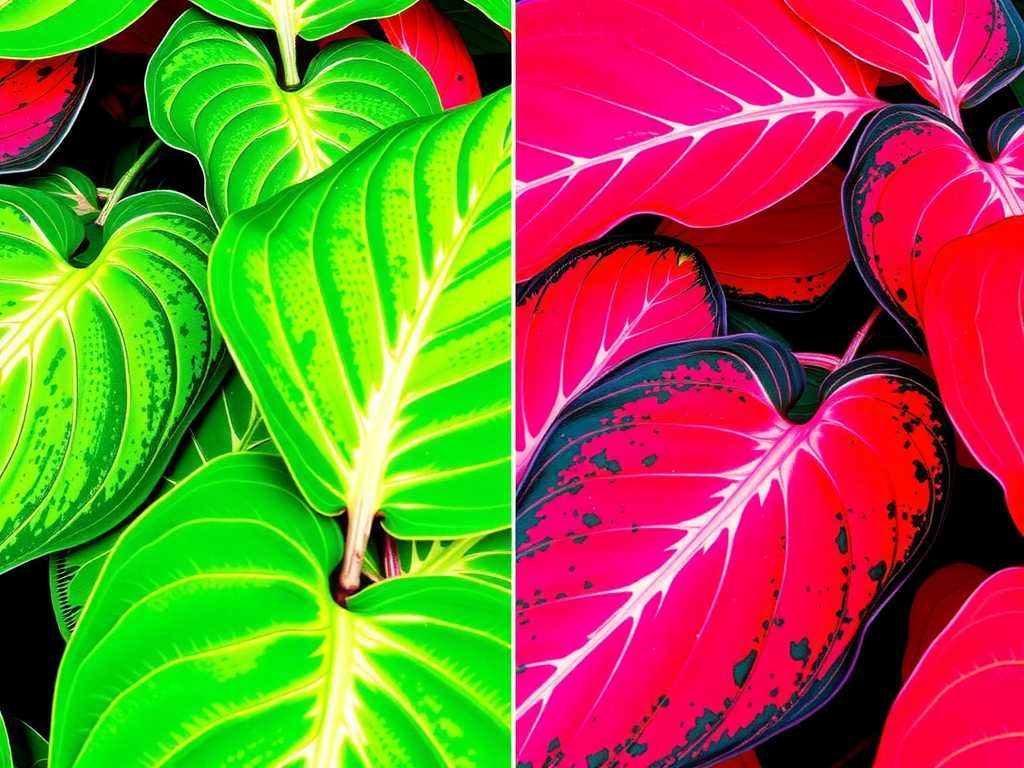
The Two-Week Verdict: A Visible Transformation The results were not just subtle; they were dramatic. The most significant improvement was in the plant I had gradually acclimated. Its previously pale pink veins deepened to a vibrant, candy-floss pink. The green background of the leaves became a richer, more luminous lime. The leaves themselves felt sturdier. The plant that had always been in decent light showed improved contrast and deeper red speckling. Even the sun-scorched leaf stopped deteriorating, and the plant focused energy on pushing out a new, perfectly colored leaf.
Advanced Tips for Specific Light Challenges
Not every home has perfect east-facing windows. Here’s how I tackled other scenarios:
- For Low-Light Rooms: If your only space is a north-facing room or a room with small windows, consider grow lights. I tested a basic, full-spectrum LED strip light placed about 12 inches above the foliage for 12 hours a day. It stopped further fading and maintained good color, though it didn’t produce the same dramatic pop as bright natural light. The Royal Horticultural Society (RHS) advises that for ornamental foliage, broad-spectrum LEDs are effective and energy-efficient.
- For Harsh, Direct Light Environments (South/West Windows): Distance and diffusion are key. Moving the plant 3-5 feet back from the window or using a sheer curtain is non-negotiable. Observe the leaf texture; if it feels thin or looks slightly washed out, it’s still getting too much intensity.
- Seasonal Adjustments: The American Horticultural Society’s (AHA) light zone maps remind us that the sun’s angle changes. A perfect summer spot might become too dark in winter. I’ve learned to be ready to move my caladiums closer to windows in the fall and winter, and sometimes supplement with grow lights during short, gloomy days.
Common Questions on Light and Caladium Color
Can caladiums recover from sunburn? The damaged parts of the leaf will not recover. The bleached or crispy patches are permanent. However, the plant itself can recover if moved to proper light. Do not remove the damaged leaf immediately, as it can still contribute energy. Wait until the plant produces a few new, healthy leaves, then you can trim the unsightly one away.
Why are my new leaves coming in green with no color? This is almost always a light issue. While some varieties are naturally greener, a pronounced loss of variegation or color in new growth signals insufficient light. The plant is prioritizing chlorophyll production for basic survival over producing showy anthocyanins. Increase the brightness of the indirect light it receives.
Are there caladium varieties that need different light? Yes, generally, white and lighter-colored varieties (like ‘Moonlight’ or ‘Candidum’) can tolerate slightly lower light levels. The darker red and pink varieties (like ‘Red Flash’ or ‘Florida Sweetheart’) need brighter indirect light to express their deepest hues. Always research your specific variety, but when in doubt, provide bright, filtered light.
Finding the perfect light for your caladiums is a dynamic process, not a one-time task. It requires observation, patience, and a willingness to adjust. My two-week experiment taught me that the journey from faded to fabulous is guided by light. By auditing your space, making gradual changes, using simple tools like sheers and reflectors, and closely watching your plant’s response, you can unlock the breathtaking color potential hidden in every caladium tuber. The reward—a living masterpiece of luminous leaves—is absolutely worth the effort.





