 bluename
 If you're wondering whether Caladium White Christmas can thrive in a hanging basket, the answer is a confident yes—but only if you get the weight and drainage right from day one. I've grown this stunning white-veined beauty in hanging baskets for three seasons now, and after killing my first two plants through sheer negligence, I can tell you exactly what works. The golden rule? A 10-inch hanging basket with 5-7 tubers gives you a full, cascading display without snapping your hook or suffocating the roots. Let me walk you through everything I've learned the hard way.
Why Hanging Baskets Actually Work for Caladium White Christmas
Most people assume caladiums belong strictly in garden beds. I used to think that too. Then I realized that White Christmas caladiums, with their arrow-shaped leaves and dramatic white centers, look absolutely breathtaking when suspended at eye level. The light catches the translucent white patches differently than it does from above, and suddenly you have a living piece of art floating in mid-air.
Baskets also solve a huge problem: soil temperature. Caladiums hate cold feet, and hanging baskets warm up faster in spring because the soil isn't insulated by the cold ground. If you're in USDA zones 9-11, you can leave them out year-round, but for the rest of us, baskets make it easy to move them indoors when nighttime temps drop below 60°F.
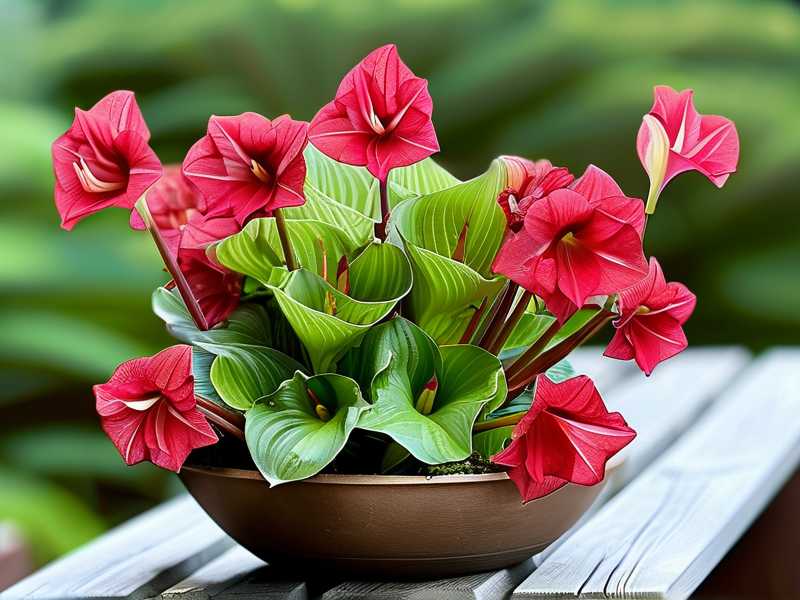
The Weight Guide: What You Need to Know Before Hanging
Here's the thing nobody tells you about growing caladiums in hanging baskets: it's not just about the plant—it's about the physics. A wet 10-inch basket filled with soil, tubers, and mature foliage can easily weigh 15-20 pounds. That's not a joke. I learned this when my cheap plastic hook snapped at 2 AM and my prized plant crashed to the floor, scattering soil everywhere and snapping three leaves.
So let me break down the weight guide by basket size:
Basket Size vs. Weight Breakdown
8-inch basket: Holds 3-4 tubers. Dry weight: about 4-5 pounds. Wet weight after watering: 8-10 pounds. Good for small spaces but honestly, the display looks a bit sparse unless you're patient.
10-inch basket: This is my sweet spot. 5-7 tubers give you dense growth. Dry weight: 7-9 pounds. Wet weight: 14-18 pounds. You need a solid hook rated for at least 30 pounds to be safe.
12-inch basket: You can fit 8-10 tubers here. Dry weight: 10-12 pounds. Wet weight: 20-25 pounds. Honestly, this is getting heavy, and I only recommend it if you have a beam or a very sturdy bracket.
14-inch basket: 10-12 tubers. This is essentially a hanging planter that requires two hooks. Wet weight can hit 30+ pounds. I don't bother with this size anymore. It's a backache waiting to happen.
Do the math before you buy anything. Check your ceiling hooks, your brackets, and the weight rating on your chains. I use a hanging scale to test my setups now, and it's saved me from repeating that midnight disaster.
3 Fatal Mistakes That Kill Caladium White Christmas in Baskets
Before we get into the step-by-step, let me save you from the pain I went through. I've killed more plants than I care to admit, and every single death came down to one of these three mistakes.
① Overwatering: The Silent Killer
90% of indoor plants die from overwatering, and caladiums in hanging baskets are particularly vulnerable. I remember my second White Christmas caladium—it was lush, perfect, and then within five days, the leaves started yellowing and the stems went mushy at the base. I panicked and watered more, thinking it was thirsty. It wasn't. The tubers had rotted before I even noticed anything was wrong.
Here's the problem with hanging baskets: the soil dries unevenly. The top looks dry while the bottom stays soggy. You can't judge by poking your finger into the top inch. What I do now is lift the basket to feel the weight. A dry basket feels noticeably lighter than a wet one. When it feels light, I water. When it still has weight, I wait.
The truth is that caladiums like consistent moisture, but they absolutely cannot sit in waterlogged soil. Those fleshy roots are delicate, and once they rot, the plant is done. Wait until the top 1-2 inches of soil feels dry, then water thoroughly until it drains from the bottom. And always use a pot with drainage holes—I'll get to that in a second.
② Incorrect Light: Too Much or Too Little
Caladium White Christmas has a very specific relationship with light, and getting it wrong leads to failure. Its white leaves have less chlorophyll than green varieties, which means they burn easily. I tried putting my first basket in full morning sun, thinking more light equals better growth. Within two days, the white sections turned brown and crispy, like they'd been singed.
On the flip side, I've also kept baskets in deep shade, which led to leggy stems that stretched toward whatever light they could find. The leaves became thin, droopy, and lost that crisp white-white appearance. They looked more like sad green curtains.
The truth is that this variety needs bright, indirect light, or dappled shade if you're growing outdoors. In the morning, a couple of hours of gentle sun is fine, especially in cooler climates. But once noon hits, that harsh afternoon sun will telegraph right through those delicate white leaves. Indoors, I place my baskets near a north or east-facing window, or a few feet back from a south-facing window where the light filters through sheer curtains.
One more trick I've learned: rotate your basket a quarter turn every time you water. This prevents the plant from leaning toward the light and keeps the growth uniform.
③ Using the Wrong Pot: The Container Trap
Baskets aren't all created equal. My first attempt with Caladium White Christmas was in a solid, non-porous plastic basket with no drainage holes. I figured I'd water carefully and it would be fine. It wasn't fine. The water pooled at the bottom, the tubers sat in stagnant moisture, and within three weeks, I dug up tubers that were hollow and brown inside. I was gutted.
The basket matters more than you think. Soluble salts and fertilizer build up in pots without drainage, which damages the roots. And baskets that are too small restrict the tubers, which need room to expand. I use a premium grade, lightweight 10-inch plastic basket with four drainage slots, plus a coco coir liner that retains some moisture while still allowing air circulation.
Here's the thing: choose a basket with good holes and a liner that dries evenly. I've also tried glazed ceramic containers and wire baskets with sphagnum moss liners. The wire baskets look absolutely gorgeous and give you that classic hanging basket vibe, but they dry out faster, so you need to water more often. The plastic ones are forgiving and practical. If you go with an unglazed terracotta pot, be warned that it wicks moisture away quickly and requires more frequent watering.
Step-by-Step: My Proven Process for Planting Caladium White Christmas in Hanging Baskets
Let me walk you through exactly what I do, from tuber to show-stopping basket. This is the method I've refined over three years, and it consistently gives me a full, bushy display that lasts from late spring to fall.
Step 1: Choose and Prep Your Tubers
Start with high-quality tubers, not the dried-up ones that have been sitting in a warehouse for months. I buy mine from a trusted grower in my region. Look for tubers that are firm, about 1.5-2 inches in diameter, with at least one visible eye or growth point. Bigger isn't always better; a medium-sized tuber with multiple eyes will give you a fuller basket than one giant odd-shaped tuber.
Before planting, I soak my tubers in room-temperature water for about 30 minutes. This helps rehydrate them and kick-starts the growth process. Some growers say it's unnecessary, but I've noticed faster sprouting with soaked tubers. Feel free to skip this step if your tubers are already plump and fresh.
One more thing: if you're in a cooler climate, you can "wake up" your tubers indoors about 8 weeks before your last frost date. I plant mine in 4-inch pots first, keep them in a warm spot with bottom heat if possible, and then move them to the hanging basket once the shoots are a few inches tall. This gives me a head start on the season.
Step 2: Choose the Right Soil Mix
You want a potting mix that's light, fluffy, and holds moisture without becoming soggy. I use a mix of:
- 60% high-quality potting soil
- 30% perlite for drainage and aeration
- 10% coco coir or peat moss for moisture retention
The perlite is crucial. It creates air pockets in the soil that allow oxygen to reach the roots. Since caladiums can be prone to rot, good aeration is your best insurance policy.
Avoid garden soil. It's too heavy, compacts easily, and can introduce pests and diseases into your basket. And don't be tempted to skip the perlite to save money—it's not worth the risk of root rot.
Step 3: Fill the Basket and Plant the Tubers
Fill your basket with the potting mix, leaving the top few inches empty. Place the tubers on the soil surface with their eyes facing upward. The eyes can be hard to spot, but they're usually slightly raised and pinkish-white. If you can't identify the eyes, just plant the tuber sideways. It'll figure out which way is up eventually.
Space the tubers about 3-4 inches apart. For a 10-inch basket, I typically place one in the center and then 4-5 around the edges, with the tuber tops sitting about 1.5-2 inches below the soil surface. Burying them too shallow can cause the tubers to dry out, but too deep delays sprouting.
After planting, water thoroughly until water runs from the drainage holes. Then, set the basket in a warm, bright location with indirect light. Germination happens faster when the soil is warm, around 70-85°F. I've used a heat mat under my baskets in early spring, and it shortens the wait time by a couple of weeks.
Step 4: Watch for Sprouts and Begin Care Regimen
Sprouts usually appear within 2-4 weeks, depending on soil temperature and tuber quality. The first leaves might be small and slightly deformed; don't worry, this is normal. Within another week, you'll see more robust leaves taking shape.
Once the sprouts are visible, I start a light fertilization routine. Caladiums are not heavy feeders, but they do benefit from regular feeding during the growing season. I use a balanced, water-soluble fertilizer (like a 10-10-10) diluted to half strength every two weeks. As soon as the basket is full and lush, I switch to a formula higher in phosphorus (like a 15-30-15) to support root and tuber development.
Here's a tip: in early summer, if your basket seems to be growing slowly, don't panic. I've noticed that White Christmas caladiums often start slowly and then explode with growth once the soil warms up fully. Patience pays off.
My Two-Week Observation Log: Real Results, Not Theory
I kept a genuine two-week journal of a new basket I planted this spring. Here's exactly what happened, day by day, so you know what to expect.
Day 1: Planted 5 tubers in a 10-inch basket using my usual soil mix. Soaked the tubers for 30 minutes beforehand. Watered thoroughly, placed near an east-facing window. Soil temperature was about 72°F.
Day 4: Nothing visible yet. I dug gently near the surface and found that the tubers were still firm, with no signs of rot. Good sign. The top inch of soil felt dry, so I gave it a light misting.
Day 7: First signs of life! Two small green shoots emerged from the soil. They were about half an inch tall and had a slight pinkish tint. I noticed the soil was still slightly moist, so I didn't water again.
Day 10: All 5 tubers have sprouted now, with the shoots reaching about 1-2 inches tall. The leaves are starting to unfurl, and I can already see the characteristic white markings. The plastic basket is holding moisture well, and there's no sign of condensation. I rotate the basket slightly to encourage even growth.
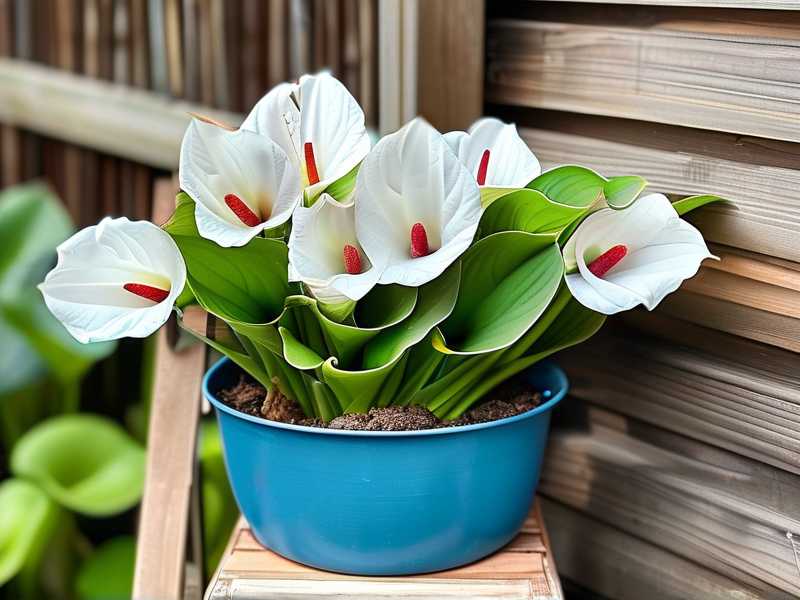
Day 14: The shoots have grown to about 4-5 inches, and the first true leaves are fully open. They're small but gorgeous, with deep green veins, striking white centers, and slightly rippled edges. The plant looks healthy and the stems are sturdy. I lift the basket and feel it's still quite heavy, so I skip watering for another couple of days.
By week 3, the basket looks fuller, with leaves at different stages of development. By week 5, it's a full, cascading ball of foliage that hangs beautifully.
Maintenance Routine: Keeping Your Basket Lush All Season
Watering Schedule
Here's the thing about watering hanging baskets: there's no fixed schedule that works for everyone. Your environment changes everything—temperature, humidity, wind, and sunlight all affect how fast the soil dries. I check my baskets every morning and lift them to gauge the weight. If they're light, I water slowly until water drains from the bottom.
In the summer, when temperatures are above 85°F, I water daily or even twice daily. In cooler weather, every 2-3 days is usually enough. A humidifier near my indoor baskets helps in winter.
Fertilizer Routine
Feed with a balanced, water-soluble fertilizer at half-strength every two weeks from spring through fall. Skip fertilizing when the plant is dormant. I've also experimented with slow-release granules mixed into the soil at planting time—works well, but I still add a liquid feed once a month during peak growth.
Pinching and Pruning
You'll notice older, outer leaves fading and yellowing after a few months. Prune them at the base to keep the basket looking fresh and tidy. Plus, in mid-summer, if the basket starts looking leggy, I pinch back the tips of long stems to encourage bushier growth.
Pest Control
Whiteflies and spider mites can sometimes find their way to caladiums, especially indoors. I check the undersides of leaves weekly. If I spot any pests, I treat with a gentle insecticidal soap spray. The white, tender leaves are more susceptible than green varieties, so regular monitoring is key.
Common FAQ: Answers From Experience
Can Caladium White Christmas survive indoors all year?
Yes, if you provide consistent warmth and humidity. I overwinter mine indoors in brighter rooms and keep the soil moderately moist. In spring, I take the baskets outdoors to a sheltered, partially shaded patio for extra vigor, but always remember to bring them in before nighttime temperatures drop below 60°F.
How long do hanging basket caladiums live?
In the right conditions, tubers can live for years, producing new growth each season. The plant goes dormant in winter, and the foliage dies back regardless of whether you dig up the tubers or leave them in the basket. As long as the tubers are kept dry and frost-free during dormancy, you can rehydrate and regrow them the next spring.
How many tubers should I plant in a 12-inch basket?
Start with 8-10 tubers for a full, trailing display. Space them about 3-4 inches apart, with the tips just below the soil surface. Use a high-quality, well-draining mix, and consider adding a slow-release fertilizer at planting time for robust growth.
Final Thoughts
Growing Caladium White Christmas in hanging baskets is one of the most rewarding things I've done as a plant parent. The heavenly white leaves with their deep green margins look like they belong in a painting, and they add instant drama to any corner of a room or patio.
That said, it's not a set-and-forget plant. Weight management, drainage, and light control are the three pillars of success. If you follow the guidelines I've shared—choosing a basket no larger than 10 or 12 inches, starting with good tubers, waiting for the soil to dry before you water, and keeping the light bright but indirect—you'll have a basket that makes you smile every single day.
Remember, even after all this experience, I still lose a tuber now and then. That's just how gardening goes. But those small losses taught me the lessons I've shared with you, and now my baskets look better than ever. Start with proper weight planning, be patient in those first few weeks, and you'll be rewarded with a truly spectacular display.





